
I realized the importance of health insurance plans when an unexpected medical emergency struck my family. Having coverage saved us from overwhelming expenses and gave us access to quality care without financial stress. It taught me that choosing the right plan isn’t just about premiums, it’s about peace of mind and protection during life’s uncertainties. Now, I always review policy details carefully and prioritize plans that balance affordability with comprehensive coverage.
Health Insurance Plans provide financial protection against medical expenses by covering hospitalization, treatments, and preventive care, ensuring affordable healthcare and peace of mind for individuals and families.
In this article we will study “Health Insurance Plans.”
What Are Health Insurance Plans?
Health Insurance Plans are contracts between an individual (or employer) and an insurance provider. Under this agreement, the insurer agrees to cover specified medical expenses in exchange for regular premium payments. These expenses may include hospital stays, surgeries, diagnostic tests, prescription drugs, and preventive services, depending on the policy.
Core Objectives of Health Insurance
Health insurance plans are designed with several key objectives:
- Risk pooling to distribute healthcare costs across a large population
- Financial protection against high or unexpected medical expenses
- Access to healthcare services without immediate out-of-pocket burden
- Encouragement of preventive care to reduce long-term health risks
By spreading risk and cost, health insurance plans create a sustainable healthcare financing model for both individuals and societies.
Types of Health Insurance Plans
source: hdfclife-international.com
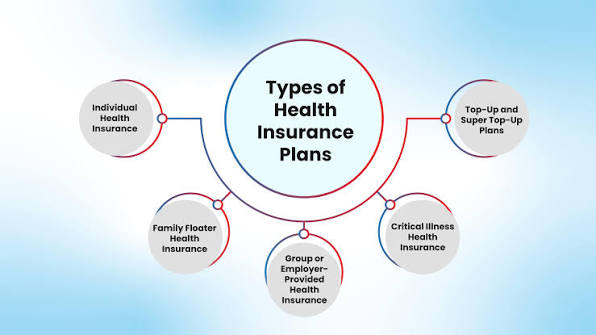
Health insurance plans can be categorized based on coverage structure, provider networks, and policy ownership. Each type serves different healthcare and financial needs.
Individual Health Insurance Plans
Individual health insurance plans are purchased by individuals for themselves or their families. These plans are ideal for self-employed professionals, freelancers, or those without employer-sponsored coverage. Coverage levels, deductibles, and premiums vary, allowing policyholders to select plans tailored to their medical needs and budgets.
Family Health Insurance Plans
Family plans cover multiple members under a single policy, often at a lower combined cost than individual plans. These policies are particularly beneficial for households with dependents, offering shared coverage limits and simplified management.
Employer-Sponsored Health Insurance Plans
Employer-sponsored plans are provided by companies as part of employee benefits packages. Employers typically subsidize a portion of the premium, making these plans cost-effective. Coverage may include dependents, wellness programs, and supplemental benefits.
Government-Sponsored Health Insurance Plans
Government-backed plans are designed to provide coverage to specific population segments, such as low-income individuals, seniors, or people with disabilities. These plans focus on accessibility, affordability, and essential healthcare services.
Health Insurance Plan Structures
source: linkedin.com
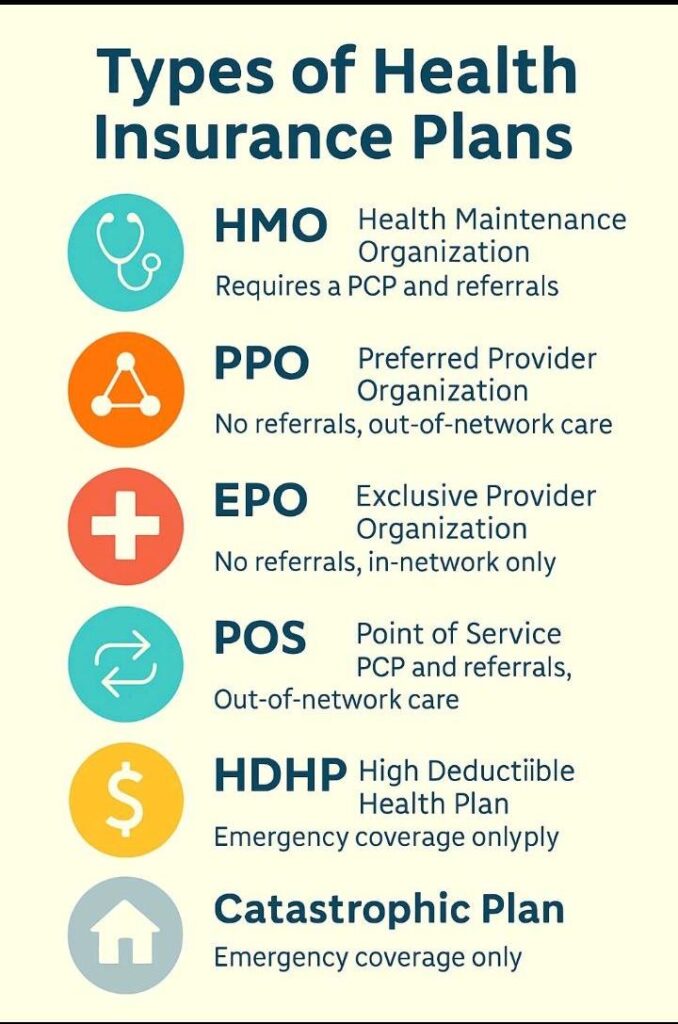
Understanding plan structures is critical for evaluating how healthcare services are accessed and paid for.
Health Maintenance Organization (HMO)
HMO plans require members to choose a primary care physician (PCP) who coordinates all medical services. Referrals are needed to see specialists, and care is generally limited to a specific network of providers. HMOs typically offer lower premiums and predictable costs.
Preferred Provider Organization (PPO)
PPO plans offer greater flexibility by allowing members to see specialists without referrals and access out-of-network providers at higher costs. Premiums are usually higher, but PPOs are preferred by individuals seeking choice and convenience.
Exclusive Provider Organization (EPO)
EPO plans combine features of HMOs and PPOs. They do not require referrals but limit coverage to in-network providers except in emergencies. EPOs balance flexibility and cost efficiency.
Point of Service (POS)
POS plans allow members to choose between in-network and out-of-network care, with referrals required for specialists. These plans offer moderate flexibility with structured cost control.
Key Components of Health Insurance Plans
A thorough understanding of policy components helps in accurately comparing health insurance plans.
Premiums
Premiums are the regular payments made to maintain coverage. They may be paid monthly, quarterly, or annually and vary based on age, location, coverage level, and insurer.
Deductibles
- A deductible is the quantum a policyholder must pay out of fund before the insurance content begins. Advanced deductibles generally affect lower decorations.
Copayments and Coinsurance
- Copayments are fixed quantities paid for specific services, similar to croaker visits.
- Coinsurance is a percentage of costs shared between the insurer and the policyholder after the deductible is met.
Out-of-Pocket Maximum
This is the maximum amount a policyholder will pay in a policy year. Once reached, the insurer covers 100% of eligible expenses.
Coverage Areas in Health Insurance Plans
source: gh.bmj.com
Health insurance plans may include a wide range of coverage options depending on the policy.
Inpatient and Outpatient Care
Coverage includes hospitalization, surgeries, intensive care, and outpatient procedures such as diagnostics and minor treatments.
Prescription Drug Coverage
Most plans cover prescription medications, categorized into tiers based on cost and formulation.
Preventive and Wellness Services
Preventive care includes vaccinations, screenings, annual checkups, and wellness programs aimed at early disease detection and long-term health maintenance.
Mental Health and Behavioral Services
Modern health insurance plans increasingly include mental health services, therapy sessions, and substance abuse treatment.
Specialized Health Insurance Plans
Certain health insurance plans are designed for specific needs and circumstances.
Critical Illness Insurance
This plan provides a lump-sum payout upon diagnosis of severe illnesses such as cancer, heart disease, or stroke.
Maternity and Newborn Coverage
Maternity plans cover prenatal care, delivery expenses, and postnatal support, ensuring comprehensive maternal health coverage.
Senior Citizen Health Insurance Plans
These plans cater to older adults, covering age-related conditions, chronic disease management, and frequent medical consultations.
How to Choose the Right Health Insurance Plan
Selecting the appropriate health insurance plan requires careful evaluation of multiple factors.
Assess Healthcare Needs
Analyze personal or family medical history, frequency of doctor visits, and ongoing treatments to determine coverage requirements.
Compare Costs and Benefits
Evaluate premiums, deductibles, copayments, and out-of-pocket limits to understand total cost implications.
Network and Accessibility
Ensure preferred hospitals, doctors, and specialists are included in the insurer’s network.
Policy Exclusions and Limitations
Review exclusions, waiting periods, and coverage caps to avoid unexpected expenses.
Benefits of Health Insurance Plans
Health insurance plans offer both tangible and long-term advantages.
Financial Security
Insurance minimizes the financial impact of medical emergencies and planned treatments.
Access to Quality Healthcare
Policyholders gain access to a network of accredited healthcare providers and facilities.
Preventive Health Management
Coverage for preventive services promotes early diagnosis and healthier lifestyles.
Peace of Mind
Knowing that medical expenses are covered allows individuals to focus on recovery rather than finances.
Common Myths About Health Insurance Plans
Misconceptions often prevent people from fully utilizing health insurance benefits.
Health Insurance Is Only for the Sick
Insurance is most valuable when purchased early, before medical conditions arise.
Young and Healthy Individuals Do Not Need Insurance
Unexpected accidents and illnesses can affect anyone, regardless of age.
All Health Insurance Plans Are the Same
Plans differ significantly in coverage, cost, and network structure.
The Future of Health Insurance Plans
The health insurance industry is evolving rapidly, driven by digital transformation, data analytics, and personalized healthcare.
Technology Integration
Telemedicine, AI-driven diagnostics, and digital health platforms are becoming standard features.
Value-Based Care Models
Insurers are shifting toward outcome-focused reimbursement models to improve care quality and cost efficiency.
Personalized Insurance Products
Data-driven customization allows insurers to design plans aligned with individual health profiles.
Advanced Comparison of Health Insurance Plans
Choosing between health insurance plans often requires a side-by-side evaluation of technical variables that directly impact cost efficiency and care quality.
Cost Efficiency vs Coverage Depth
Low-premium plans may appear attractive initially but often carry higher deductibles and coinsurance. Comprehensive plans, while more expensive upfront, typically reduce long-term out-of-pocket exposure, especially for individuals with recurring medical needs.
Network Breadth and Provider Access
Plans with broader provider networks offer greater flexibility but may increase premium costs. Narrow-network plans optimize cost control but limit provider choice, making them suitable for users with predictable healthcare patterns.
Claims Settlement and Policy Transparency
Efficient claims processing, digital claim tracking, and transparent policy wording are key indicators of a high-quality insurer. Faster settlement cycles directly improve patient experience and care continuity.
Health Insurance Plans and Chronic Disease Management

source: indusindinsurance.com
Modern health insurance plans increasingly emphasize long-term disease management rather than episodic care.
Integrated Care Programs
Insurers now collaborate with healthcare providers to offer structured programs for diabetes, cardiovascular diseases, and respiratory conditions. These programs focus on monitoring, medication adherence, and lifestyle optimization.
Data-Driven Risk Assessment
Wearable technology and health data analytics enable insurers to assess risk more accurately, allowing for personalized premiums and proactive health interventions.
Digital Transformation in Health Insurance Plans
Technology is redefining how health insurance plans are designed, delivered, and managed.
Telemedicine and Virtual Care
Many policies now include virtual consultations, reducing costs and improving accessibility for routine medical needs.
AI and Automation
Artificial intelligence enhances underwriting accuracy, fraud detection, and customer support through automated claims and predictive analytics.
Mobile Health Platforms
Insurers provide mobile applications for policy management, appointment scheduling, and real-time claims status, significantly improving user engagement.
Regulatory and Compliance Considerations
Health insurance plans operate within strict regulatory frameworks designed to protect consumers.
Policy Standardization
Regulatory bodies enforce minimum coverage standards to ensure essential health benefits are included across all plans.
Consumer Rights and Disclosure
Clear disclosure of exclusions, waiting periods, and cost-sharing mechanisms is mandatory, promoting informed decision-making.
Frequently Asked Questions:
How much is a health insurance plan per month?
Monthly health insurance plans typically cost between $300 and $600, depending on age, location, coverage level, insurer, and whether the plan is individual or employer-sponsored.
What is the best, most affordable health insurance?
The most affordable health insurance usually includes government-subsidized marketplace plans, employer-sponsored coverage, or high-deductible plans paired with Health Savings Accounts for cost efficiency.
What are the top 10 health insurance plans?
Top health insurance plans often include UnitedHealthcare, Blue Cross Blue Shield, Aetna, Cigna, Humana, Kaiser Permanente, Anthem, Molina Healthcare, Oscar Health, and Centene.
Which is the best medical insurance plan?
The best medical insurance plan depends on personal healthcare needs, preferred doctors, budget, and location, with PPOs offering flexibility and HMOs providing lower-cost, structured care.
Is $500 a month for health insurance normal?
Yes, $500 per month is a normal premium for comprehensive individual health insurance, especially for adults without employer subsidies or government assistance in many regions.
What is the best age to buy health insurance?
The best age to buy health insurance is early adulthood, as premiums are lower, coverage begins before health conditions develop, and waiting periods are completed earlier.
Is Blue Cross or UnitedHealthcare better?
Both are industry leaders; Blue Cross offers broader regional networks, while UnitedHealthcare excels in digital tools, employer plans, and nationwide coverage flexibility.
Can you get health insurance for $100 a month?
Yes, health insurance for around $100 per month is possible through government subsidies, Medicaid eligibility, catastrophic plans, or employer-sponsored coverage with premium contributions.
Which private health insurance is best?
The best private health insurance varies by location but commonly includes UnitedHealthcare, Blue Cross Blue Shield, Aetna, and Cigna for strong networks and comprehensive coverage options.
Is it better to have PPO or HMO?
A PPO is better for flexibility and specialist access, while an HMO is better for lower costs and coordinated care through a primary physician, depending on healthcare preferences.
Conclusion:
Health Insurance Plans are essential for protecting individuals and families from rising medical costs and unexpected health emergencies. Choosing the right plan requires understanding coverage options, costs, provider networks, and long-term healthcare needs. With advancements in digital health, personalized insurance products, and preventive care, modern plans offer more than just financial support. Investing in a well-balanced health insurance plan ensures access to quality healthcare, financial stability, and peace of mind. Ultimately, informed decision-making leads to better health outcomes and long-term security.
Leave a Reply